
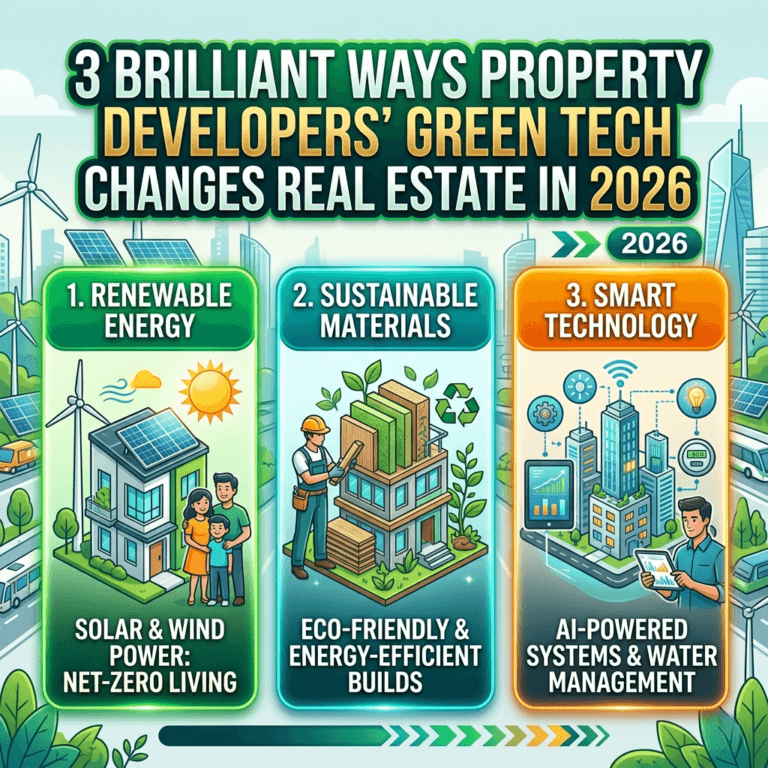
3 Brilliant Ways Property Developers’ Green Tech Changes Real Estate in 2026
The global real estate market has reached a critical tipping point. Property developers’ green tech adoption has shifted entirely from a niche marketing gimmick used by a few eco-conscious companies into an absolute industry standard. Driven by strict global climate rules, tightening Environmental, Social, and Governance (ESG) compliance, and a highly sustainability-fluent homebuyer base, the sector is leaving traditional, high-waste building methods behind.
Today, building communities that simply minimize damage to the planet is no longer enough. The standard has officially been elevated to regenerative development, creating physical spaces that actually restore ecosystems, manage resource loops, and generate more renewable energy than they consume. Here is a close look at how modern, forward-thinking real estate builders are utilizing these cutting-edge technological shifts to change our urban centres.
1. Scaling Net-Zero Energy Buildings (NZEBs)
The most significant pillar of property developers’ green tech strategies involves the mass scalability of Net-Zero Energy Buildings. These structures generate as much electricity on-site as they use over a year. While the core concept is not completely brand new, the integration of advanced photovoltaic (solar) glass panels, highly efficient geothermal heating loops, and local battery storage networks has finally made these builds affordable at a massive institutional scale.
Furthermore, these systems do not just sit passively on a roof. Builders now tie these developments into advanced localized microgrids. When a residential building generates surplus solar power during peak afternoon hours, it can trade that extra energy automatically with the local municipal electrical grid. This process creates passive revenue streams for the property management group while lowering overall community energy strains.
2. Integrating Artificial Intelligence and Smart IoT Ecosystems
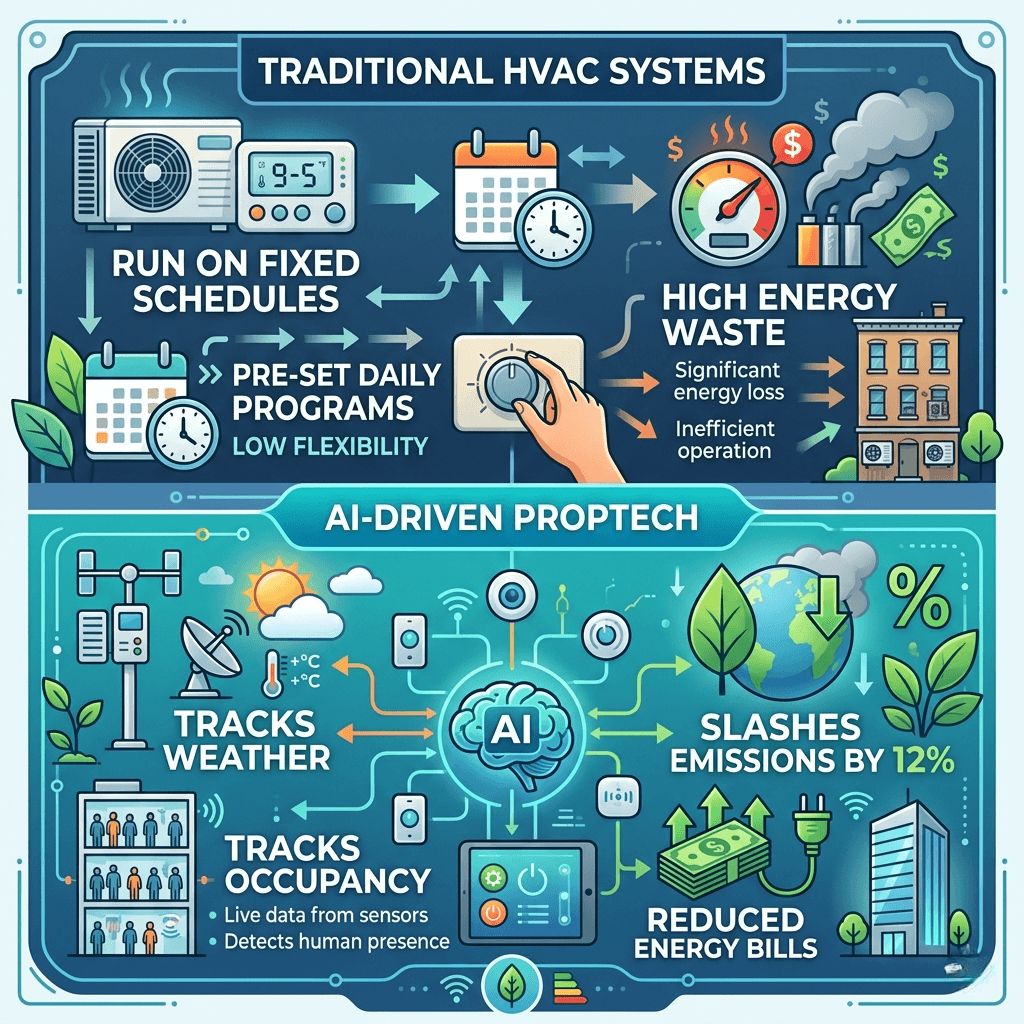
Another way property developers’ green tech frameworks are transforming modern construction is through the deployment of Artificial Intelligence (AI) and the Internet of Things (IoT). Buildings are no longer static blocks of concrete and glass; they are dynamic, data-driven ecosystems that react to real-world environments in real time.
Developers are embedding thousands of intelligent sensors across wall envelopes, water channels, and ventilation networks. These sensors feed live data directly into a “digital twin”, a virtual replica of the physical building structure. AI engines process this data to instantly modify heating, cooling, and air ventilation levels based on changing outdoor weather conditions and real-time indoor occupancy patterns. According to global research data, installing these smart automated platforms helps properties drastically reduce total household emissions while extending the life cycle of heavy physical machinery.
3. Transitioning to Carbon-Negative Building Materials
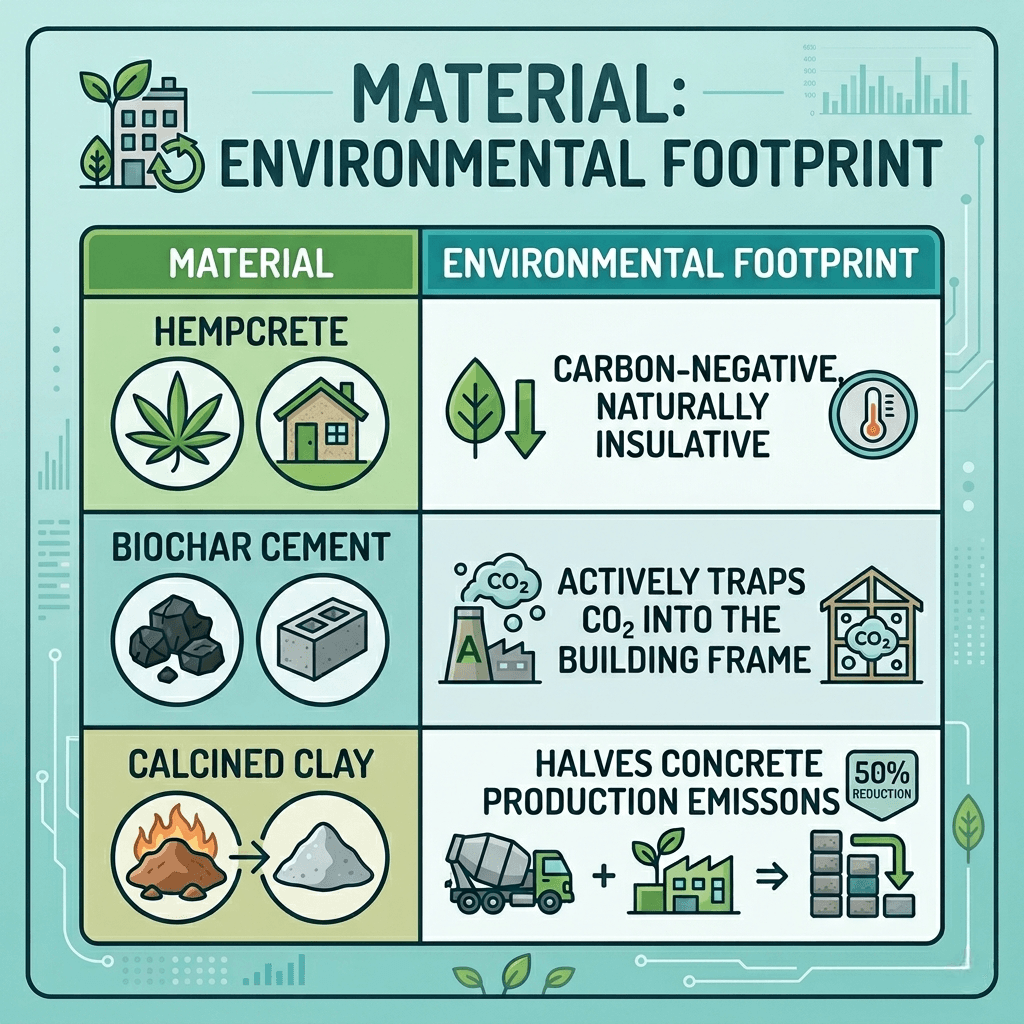
Because the global construction sector historically contributes up to 38% of global carbon dioxide emissions, real estate companies are completely overhaul their procurement pipelines. Property developers green tech initiatives are prioritizing structural materials that pull carbon dioxide directly out of our atmosphere instead of pumping more into it.
Major international builders are partnering with innovators like the global building materials leader Holcim to utilize biochar-infused concrete and calcined clay. Biochar traps carbon molecules that would normally escape into the environment as organic material decays. By locking it safely into structural cement frames, properties act as permanent carbon sinks. Additionally, builders are using advanced crushing automation to recycle old construction demolition waste right back into premium aggregates, creating a circular manufacturing loop.
The 2026 Bottom Line:
Properties that carry verified green certifications like LEED Gold or BREEAM no longer just protect the environment; they protect investor capital. Green-certified buildings are pulling in significantly higher property values and enjoying rapid tenant leasing speeds compared to outdated legacy properties.